

When you’re navigating a cancer diagnosis, it feels like your world is suddenly filled with clinical smells: sanitizer, hospital floors, and that specific “metallic” scent that seems to follow you home after a round of chemo. It’s a lot to process, and honestly, it can be pretty draining.
I have always preferred a natural approach when looking to support my body and living environment. I didn’t want anything to replace my medical treatment, but I desperately needed tools to help me manage the side effects and the emotional rollercoaster. Enter essential oils.
While there are hundreds of different types of essential oils out there, I’ve found a handful that have been incredibly supportive for me. They provided a sense of relief and a “peaceful” layer to a journey that often feels anything but peaceful. If you’re looking for an essential oil for cancer support, or just looking to add to your personal cancer supplements routine, I want to share what has worked for me.
Before we dive in, a quick note on where I get my oils. I’ve tried a lot of brands. Some are crazy expensive because of the “network marketing” structure, and others are so cheap you worry they’re just synthetic perfume. I eventually landed on Revive EO. They offer high-quality, therapeutic-grade oils at affordable prices without any of the “sign up your friends” pressure. It’s just good oil at a fair price, which is exactly what I needed when my budget was already stretched thin by medical bills.
Single oils
Sometimes, keeping it simple is best. These single oils became staples in my daily cancer recovery schedule.
Frankincense: The “King” of Support
Frankincense essential oil: Frankincense has been used as a complementary cancer fighter for centuries. In the essential oil world, it’s often called the “King of Oils” because of its versatility. For me, Frankincense provided a deep sense of grounding during times when my mind was racing with “what ifs.”
I personally like to apply a few drops on the soles of my feet at night. There is something about the ritual of it that signals to my body that it’s time to rest. I’ve also applied it directly on top of tumor sites (diluted, of course) as a way to feel like I was taking an active role in my healing. Some of my friends in the support community recommend a few drops on the back of the neck to help with that “brain fog” feeling.
Frankincense is often said to help balance hormone levels and support the body’s natural ability to manage cell growth. Whether you use it for natural emotional support or as a natural immune booster, it’s a powerful addition to your toolkit.
Lavender: The “Swiss Army Knife”
Lavender essential oil: If you only buy one oil, make it Lavender. This oil is known as the Swiss Army knife of oils because it does a bit of everything.
During treatment, I used Lavender from Revive EO for two main things: skin care and sleep. Chemo can do a number on your skin, and Lavender is a natural disinfectant for those minor cuts or “chemo-skin” irritations. But its real power lies in its ability to calm the nervous system.
When I felt stressed, fearful, or was having a hard time falling asleep before a big scan (we call that “scanxiety”), I would diffuse Lavender in the bedroom. It’s a fantastic natural sleep aid and provides much-needed relief for cancer-related insomnia. You can find more tips on managing the day-to-day stress in my essential cancer toolkit.
Cypress: Nosebleed Support
Cypress essential oil: This is a very specific one, but it was a lifesaver for me. For some reason, after I started chemotherapy, I became prone to regular and very abundant nosebleeds. No one could really explain why it was happening so frequently, but it was messy and honestly a bit scary.
Cypress essential oil is known for its excellent clotting abilities and its ability to strengthen blood vessels so they don’t rupture easily. To stop a nosebleed fast, I would apply a drop to my wrists and just a tiny bit to the outside of the nostril. It helped stop the bleeding much faster than just leaning forward and hoping for the best. If you’re struggling with “chemo nosebleeds,” this is a must-have.
Essential Oil Blends
While single oils are great, sometimes you need a “team” of oils working together. These blends from Revive are my go-to’s for the stronger support.
Immunity Boost: Guarding Your System
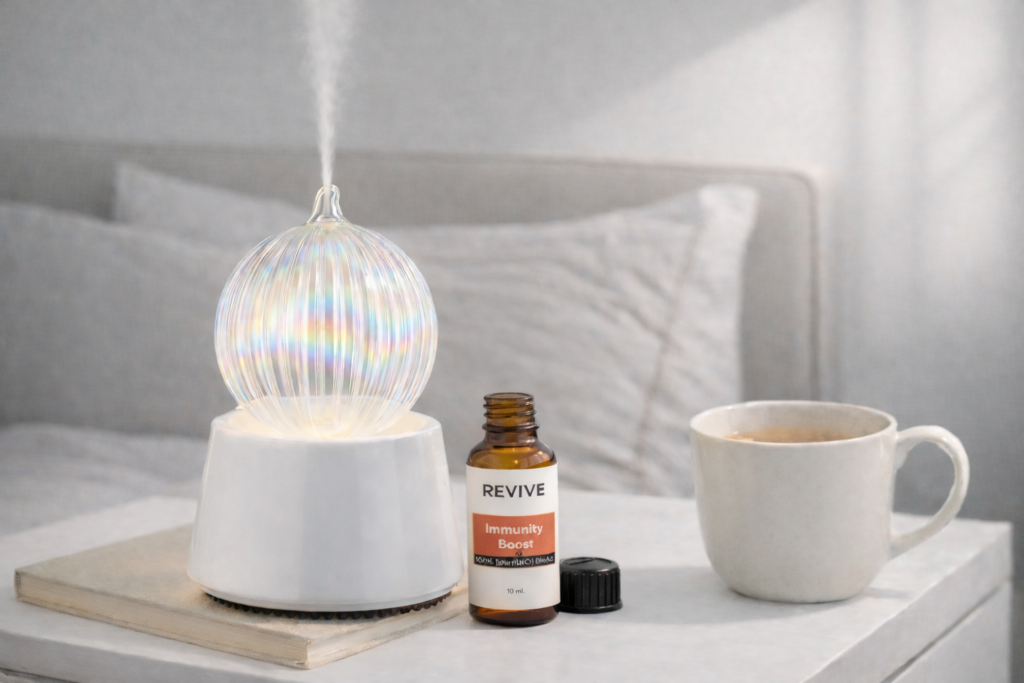
Immunity boost essential oil blend: One of the scariest parts of chemo is how it wipes out your immune system. You become hyper-aware of every cough and sneeze around you. I started using an immunity boost blend (similar to the famous “Thieves” blends) to feel like I had an extra layer of defense.
This blend usually includes things like Clove, Lemon, and Cinnamon. Because I was more prone to infection during treatment, I would diffuse this in my room for a few minutes during the day and for about 10 minutes right before bed. It makes the air feel clean and healthy.
A quick tip on safety: This is what we call a “hot” blend. It can tingle or even sting if you put it directly on your skin without a carrier. I always dilute it 50/50 with something like coconut oil before applying it to my wrists or throat.
Digest: Nausea Support
Digest essential oil blend: Nausea is the elephant in the room when it comes to cancer treatment. While I had my prescriptions, I also wanted something natural to help bridge the gaps. The Digest blend from Revive EO contains a powerhouse of plants: Peppermint, Ginger, Tarragon, Fennel, Caraway, Coriander, and Star Anise.
All of these are famous for digestion sensitivity. When the waves of nausea would hit, I’d rub a few drops into my palms, cup them over my nose, and take slow, deep breaths. It’s almost an instant reset for the brain. You can also rub it directly on your abdomen or chest. For more on managing these symptoms, check out our cancer hacks category.
How to Use Oils Safely During Treatment
When you are going through cancer, your body is extra sensitive. Here are a few “rules of the road” I followed:
Consult Your Team: I always mention what I’m using to my oncology team. It’s important they know your full “supplement” list, even the aromatic ones.
Dilute, Dilute, Dilute: Always use a carrier oil (like fractionated coconut oil or jojoba oil) when applying to your skin. Your skin might be thinner or more sensitive than usual due to radiation or chemo.
Quality Matters: Don’t buy oils from the “dollar bin.” You want pure, therapeutic-grade oils. This is why I stick with Revive.
Listen to Your Nose: Sometimes, an oil you used to love might suddenly smell “off” during chemo. That’s okay. Trust your body. If a scent makes you feel nauseous, put it away for a few weeks.
Recommended article after reading 5 essential oils for cancer: my cancer recovery schedule
Creating a Healing Environment
Healing isn’t just about the physical stuff; it’s about the environment you create for yourself. Using essential oils was a way for me to take control of my space. Instead of a hospital room, my bedroom felt like a sanctuary.
Pairing these scents with other supportive habits: like ozone insufflation for detox or simply sipping a cup of Pau d’Arco tea: creates a holistic routine that supports the whole person, not just the “patient.”
If you’re just starting out, don’t feel like you need to buy fifty bottles. Start with Lavender for sleep and Frankincense for grounding. See how your body responds. You might find, like I did, that these small bottles offer a surprising amount of strength on the days you need it most.
If you want to read more about my personal journey and the other tools I’ve used, you can check out my cancer story or browse the archive for more tips on alternative and complementary treatments.
Stay strong, keep breathing, and don’t be afraid to try new things that make your journey a little softer.
Julien