
If you’ve gone through chemotherapy, you know exactly what I’m talking about. It’s that deep, "cold to the bone" sensation that no amount of sweaters seems to fix. You could be sitting in a room that’s perfectly warm, yet you’re shivering, or your hands and feet feel like blocks of ice. It’s frustrating, right? You’re trying to move forward, but your body feels like it’s stuck in a perpetual winter.
In the conventional medical world, this is often brushed off as a side effect of anemia or neuropathy. And while those things are definitely part of the puzzle, Traditional Chinese Medicine (TCM) offers a much deeper: and honestly, more comforting: explanation for why this happens and, more importantly, how to fix it.
At My Cancer Journey, we believe in looking at the whole picture. So today, let’s talk about why you’re feeling the chill and how to bring that "inner fire" back to life using some ancient wisdom and practical, everyday hacks.
The TCM Perspective: Why the Fire Went Out
In TCM, we talk a lot about Qi (your vital energy) and Blood. Think of Qi as the electricity that keeps the lights on and the heater running in your house. Blood, in the TCM sense, isn't just the red liquid in your veins; it’s the nourishment that carries that warmth to every corner of your body.
Chemotherapy is incredibly powerful. In TCM terms, it’s often viewed as "toxic heat." It goes in to do a job: killing cancer cells: but in the process, it can burn through your body’s natural fluids and deplete your "Yang" (your warming energy). Once the treatment is over, the "heat" of the chemo clears out, but it often leaves behind a vacuum. Without enough Qi to move your blood and without enough Yang to provide warmth, you end up feeling cold, depleted, and sluggish.
Essentially, your internal pilot light has been turned down low. Our goal is to gently relight it without causing a flare-up of inflammation.
Keeping the Heat In: Physical and Lifestyle Tips
Before we even get to food, we have to stop the "leak." If you’re already low on warmth, you can’t afford to lose any more to your environment.
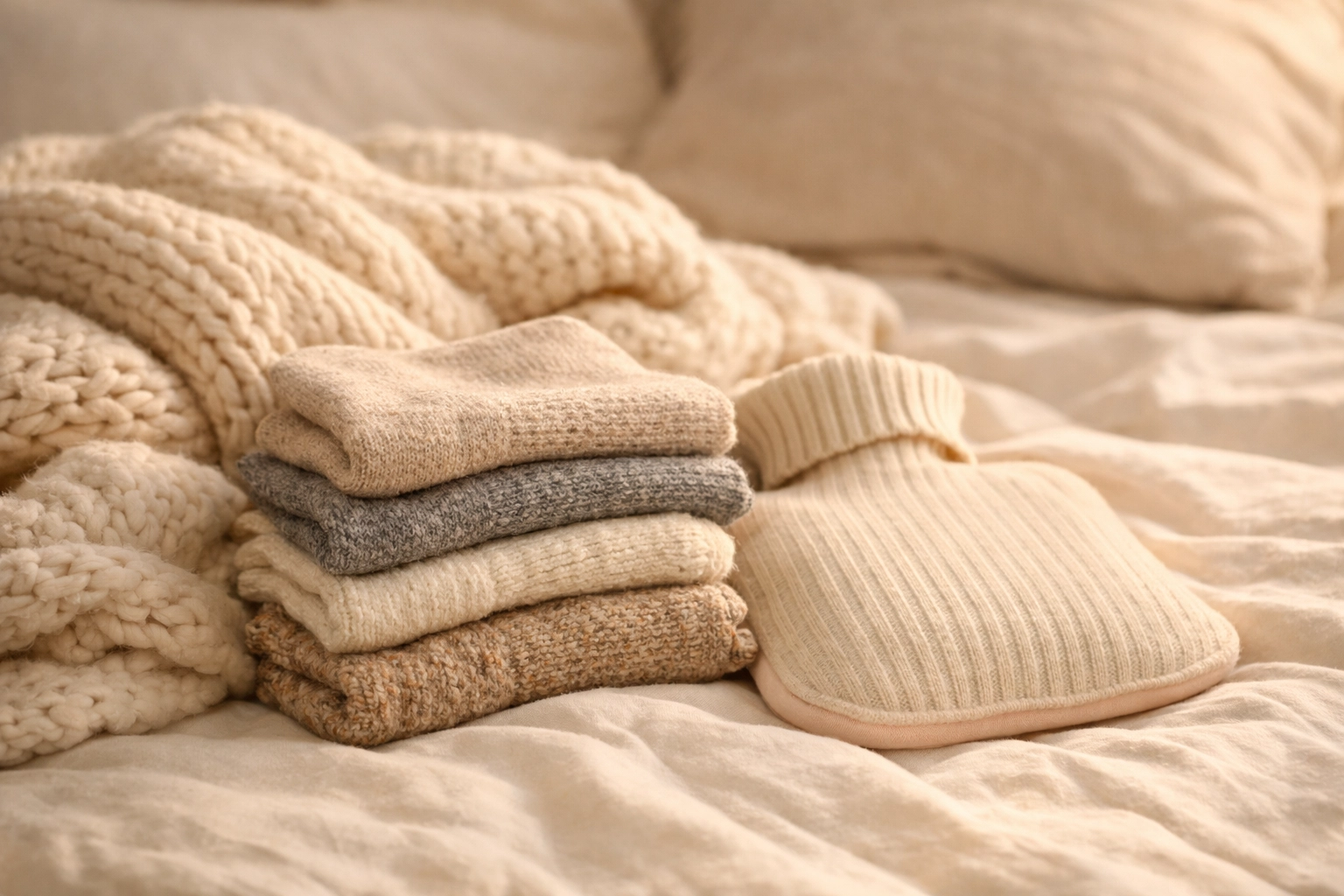
- Layer Up (Especially the Extremities): This seems obvious, but it’s about where you layer. In TCM, the ankles and the back of the neck are considered "wind gates" where cold can easily enter the body. Wear thick wool socks (even to bed!) and keep a soft scarf around your neck.
- The Magic of a Foot Soak: Before bed, try soaking your feet in warm water with a bit of ginger or Epsom salts. This draws the energy down from your head (which might be overactive with stress) and warms the "Kidney 1" point on the bottom of the foot, which is the root of your body’s energy.
- Avoid the "Cold" Lifestyle: This means no walking barefoot on tile floors and definitely no sitting directly in front of an air conditioner. If you’re heading to a treatment follow-up, pack a "warmth kit" in a canvas bag with a knit blanket and a hot water bottle.
You can find more practical tips like these in our survival guide, where we dive into the day-to-day "hacks" that make recovery a little easier.
Warming from the Inside Out: The Healing Kitchen
If you want to rebuild your Qi and Blood, the kitchen is your pharmacy. But here’s the golden rule in TCM: Stop eating cold food.
When you eat a salad or drink a smoothie straight from the fridge, your body has to spend a massive amount of its precious energy just to "cook" that food in your stomach so it can be digested. When you're post-chemo, you don't have that energy to spare.
The Power of Healing Mineral Broth
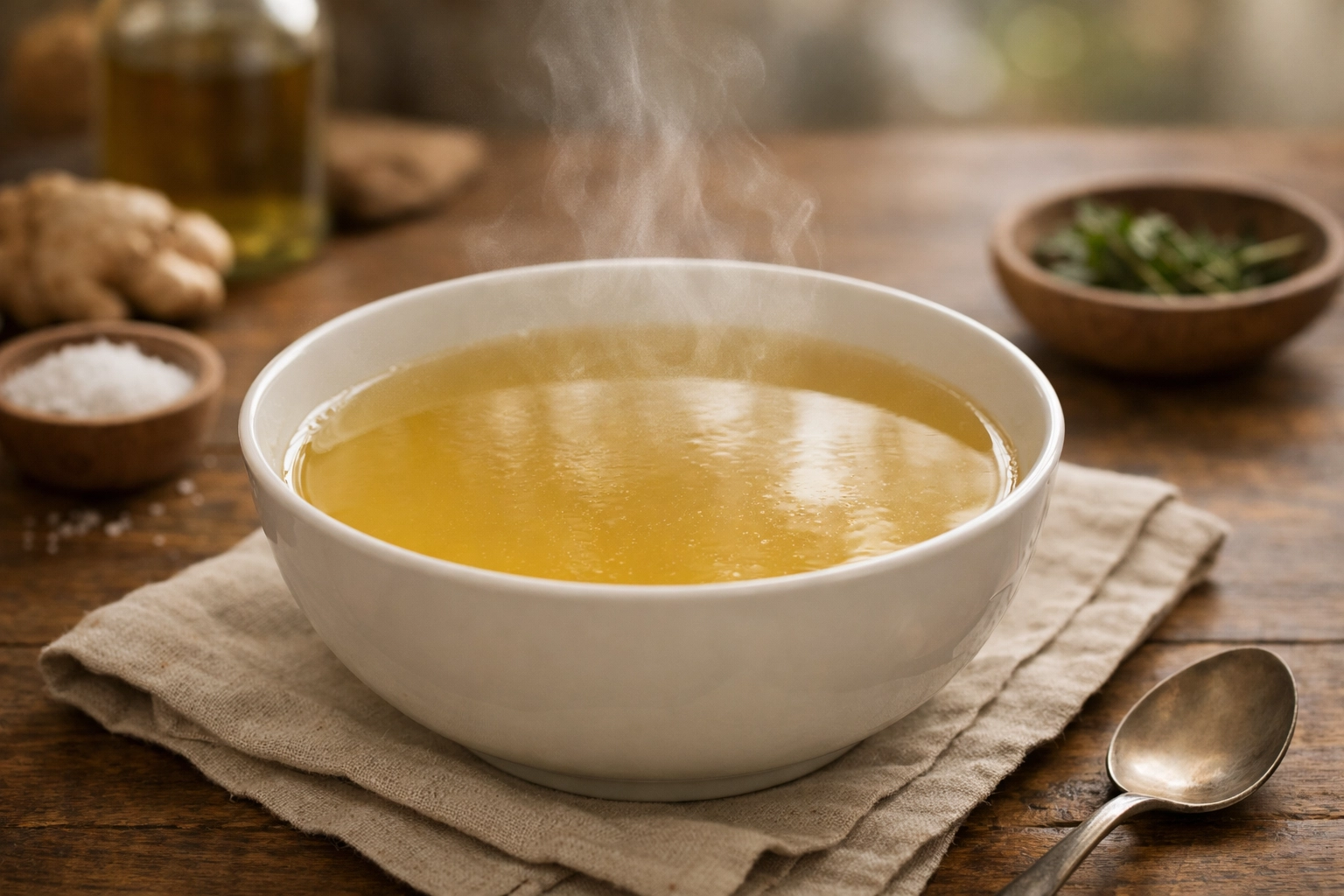
One of the best things you can do for your body right now is to embrace the healing mineral broth. This isn't just your standard stock; it’s a nutrient-dense, warm, and easily absorbable liquid that acts like a warm hug for your digestive system (or "the Spleen" in TCM terms).
By slow-cooking vegetables like leeks, carrots, celery, and warming spices like ginger and peppercorns, you create a liquid that is packed with minerals but requires zero effort for your body to process. It’s the ultimate tool for rebuilding Blood. I recommend sipping a mug of this throughout the day. You can check out more ideas for nourishing meals in our healing kitchen.
If you're short on time but still want those deep, healing minerals, another great option is Chaganju Dashi Umami Powder (https://amzn.to/4ujFbSx). This Japanese stock is a total nutrient powerhouse made from bonito flakes, kelp, and mushrooms. It’s a fantastic, mineral-dense alternative to making broth from scratch—just dissolve and go!
Warming Teas and Herbal Chai
While we’re on the subject of liquids, let’s talk about tea. Forget the iced green tea for now. You want spices that move the blood and create heat.
- Herbal Chai: A blend of cinnamon, cardamom, ginger, and cloves is fantastic. Cinnamon specifically helps to "kindle the gate of fire" (the Kidneys) in TCM. Just be sure to go easy on the sugar, as dampness/sugar can clog up your Qi. One example I like is the Blue Lotus Chai – Rooibos Flavor Masala Chai (https://amzn.to/4lnYvtY). It’s perfect because it’s caffeine-free and packed with warming spices.
- Ginger Tea: Simple, effective, and classic. Fresh ginger is better for "exterior" cold (like if you’ve been out in the rain), while dried ginger is more "interior" warming.
- Taheebo Wellness Tea: If you’re looking for a gentle, supportive tea to add to your routine, Taheebo tea is a great option. It’s been used traditionally for its life-strengthening properties and fits perfectly into a restorative daily ritual. You can read more about Taheebo tea benefits on our blog.
Rebuilding Qi and Blood: Don't Just DIY
One of the biggest mistakes I see people make is trying to figure out their own supplements during chemotherapy or post-treatment recovery without professional guidance.
In TCM, "blood deficiency" isn't the same as "iron deficiency." You might have a perfect blood panel from your oncologist but still have TCM blood deficiency symptoms: pale tongue, brittle nails, dizziness, and that nagging coldness.
To fix this, a TCM practitioner might use specific herbal formulas containing herbs like Dang Gui (Angelica Sinensis) or Huang Qi (Astragalus). These are powerful tools, but they need to be balanced for your specific body type. For example, if you have "damp-heat" lingering from treatment, taking too many warming herbs could actually make you feel worse.
Why you should work with a Chinese Herbal Practitioner:
- Personalization: They look at your tongue, feel your pulse, and listen to your specific story.
- Safety: They know which herbs might interact with any remaining medications in your system.
- Efficiency: Instead of guessing with ten different bottles from the health food store, you get one targeted formula.
We have a whole section on my natural toolkit that explores different alternative therapies, but for herbs, always go to a pro.
External Warmth: Heat Packs for Deep Relief
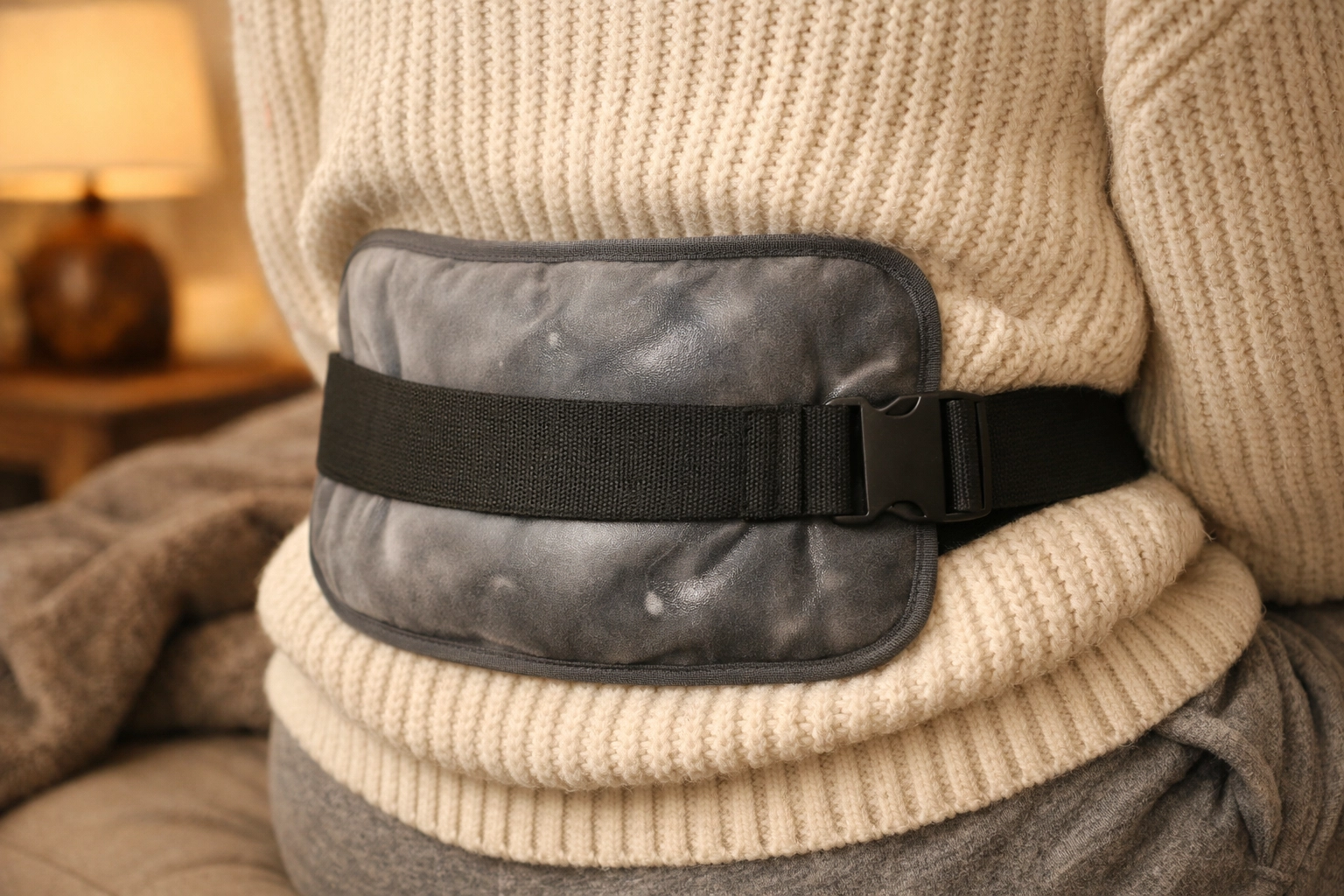
Sometimes you need warmth that lasts. I personally use these Large Heat Packs (https://amzn.to/4s98qGb) on my lower back—they come with a handy belt/strap so they stay exactly where you need them. They stay warm for over 12 hours and contain moxa (Mugwort) for a natural, soothing scent. They’re a lifesaver for that 'cold-to-the-bone' feeling.
Moving the Energy Gently
When you're cold and tired, the last thing you want to do is go for a run. And honestly, you shouldn't. High-intensity exercise can actually drain your Qi further.
Instead, think about Qi Gong or very gentle yoga. These movements are designed to "unblock" the channels where your energy might be stuck. Sometimes we feel cold not because we don't have heat, but because the heat is stuck in our core and can't get to our fingers and toes. Gentle stretching and deep, diaphragmatic breathing help "push" that warmth out to the surface.
A Hopeful Path Forward
Rebuilding your vitality after chemo is a marathon, not a sprint. It took time for your body to get this depleted, and it will take some time: and a lot of self-compassion: to build it back up.
By focusing on warming foods like that healing mineral broth, keeping your body insulated from the cold, and working with a TCM practitioner to rebuild your Blood and Qi, you’re not just treating a symptom. You’re nourishing the very foundation of your health.
You’ve been through a lot. Your body has been through a lot. It’s okay to take it slow, wrap yourself in a blanket, and sip some warm tea while you heal. The warmth will come back. Your fire isn't gone; it’s just waiting for a little fuel and a gentle breeze to get it roaring again.
Stay warm,
Julien